Ocelot Cat: The Fusion Experiment of Wild Spots and Domestic Cat Souls

Jun 12, 2025 By

The Ocicat, with its striking wild-spotted coat and domestic feline demeanor, represents one of the most fascinating experiments in selective breeding. This breed embodies a paradoxical fusion—a meticulously engineered wild aesthetic paired with the affectionate temperament of a house cat. Behind those leopard-like spots lies not a drop of actual wild blood, yet the illusion is so convincing that it challenges our perception of domestication. The Ocicat’s existence forces us to confront a compelling question: Can the essence of the wild be distilled into a companion animal without sacrificing the comforts of tameness?

The Illusion of the Wild

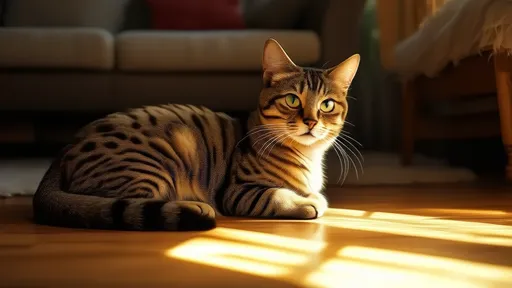
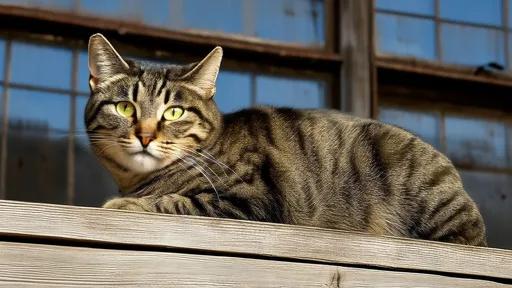
At first glance, the Ocicat’s coat is a masterpiece of deception. The bold, contrasting spots, the muscular build, and the alert gaze evoke images of a miniature ocelot prowling through jungle undergrowth. Yet, this is a cat bred entirely from domestic stock—a deliberate cocktail of Siamese, Abyssinian, and American Shorthair lineages. The spots are not inherited from some distant wild ancestor but are the result of a recessive gene carefully amplified through generations. This is mimicry at its most sophisticated, a testament to how selectively manipulating phenotype can recreate the allure of the untamed while preserving the predictability of a pet.

What makes the Ocicat particularly remarkable is how this artificial wildness interacts with its behavior. Unlike hybrid breeds that often struggle with conflicting instincts, the Ocicat exhibits none of the skittishness or unpredictability associated with wild genes. Its temperament is unabashedly domestic: sociable, playful, and prone to curling up on laps. The spots may whisper of savannahs, but the purr is purely hearthside. This dissonance between appearance and reality creates a unique psychological effect—owners report feeling as though they’ve tamed something exotic, even as their pet demands treats with all the entitlement of a common tabby.

The Alchemy of Selective Breeding

The creation of the Ocicat reads like a geneticist’s passion project. It began as an accident in 1964 when Virginia Daly, a Michigan breeder, crossed a Siamese with an Abyssinian aiming for an Aby-pointed Siamese. Among the litter appeared a kitten with an unexpected golden-spotted coat, named Tonga. Though initially dismissed as a genetic fluke, Tonga’s lineage was later intentionally refined with American Shorthairs to stabilize the spotting pattern. This three-breed triangulation proved magical: the Siamese contributed color contrast, the Abyssinian lent its ticked coat’s luminosity, and the Shorthair provided structural robustness.

What followed was less evolution than alchemy—transforming the base metals of common traits into the gold of something extraordinary. Breeders worked not just for spots, but for the right kind of spots: perfectly oval, never rosetted, distributed with artful randomness. The ideal Ocicat coat should shimmer in motion, creating the optical illusion of a cat that’s perpetually stepping through dappled sunlight. This painstaking curation of aesthetics reveals how deeply humans yearn to bring elements of wilderness into their homes, even when that wilderness is an elaborate simulation.

The Domesticated Paradox

Psychologically, the Ocicat occupies a peculiar niche in the human-animal bond. Studies suggest that owners of spotted or wild-patterned cats—even those knowing their pets lack actual wild ancestry—subconsciously attribute more independence and intelligence to them than solid-colored felines. The Ocicat capitalizes on this bias without the behavioral complications. It’s a safe rebellion, allowing people to feel connected to nature’s untamed majesty while their “wild” cat contentedly plays with feather toys. This phenomenon mirrors society’s broader obsession with faux-danger—think shark tooth pendants or leopard print upholstery—where the trappings of ferocity are coveted so long as the substance is neutered.

Yet for all its manufactured wildness, the Ocicat may inadvertently highlight what truly makes domestic cats remarkable. Their evolutionary success lies not in mimicking larger predators, but in having forged an interspecies alliance with humans. The Ocicat’s spots are impressive, but its real genius is how thoroughly it has mastered the art of companionship. When an Ocicat chirps at birds through a window or kneads its paws against a human thigh, it demonstrates behaviors far more complex than anything its coat implies. The wild aesthetic is skin-deep; the domestic soul runs marrow-deep.

Ethics of Aesthetic Breeding

The Ocicat’s story inevitably raises questions about the ethics of breeding animals for specific appearances. Unlike some extreme phenotypes that compromise health (flattened Persian faces or Munchkin legs), the Ocicat’s wild-spotted coat carries no inherent physical drawbacks. However, the breed’s existence does reflect a cultural preference that privileges certain aesthetics over others. Animal shelters overflow with “ordinary” cats while designer breeds command premium prices—a disparity that speaks to how powerfully visual appeal shapes our valuing of life.

Responsible Ocicat breeders emphasize temperament and health over mere spotting perfection, but the market’s obsession with the wild look creates inevitable pressure. The most coveted kittens are those whose markings could plausibly belong to a jungle cat, potentially skewing priorities. This tension between maintaining genetic diversity and satisfying consumer demand for exotic appearances isn’t unique to Ocicats, but their particular allure makes them a prime example of how human desires reshape animal evolution—even when that evolution is guided by human hands rather than natural selection.

The Future of Manufactured Wildness

As genetic technologies advance, the possibility of engineering even more convincing “wild-domestic” hybrids looms. CRISPR techniques could theoretically introduce actual wildcat genes without the behavioral consequences of conventional hybridization. The Ocicat might represent just the beginning of a trend where the line between wild and domestic becomes increasingly blurred—not through natural processes, but through targeted human intervention. This raises profound questions about authenticity in our relationship with nature. If a cat looks wild, behaves tamely, and contains no wild DNA, what exactly are we admiring?

Perhaps the Ocicat’s greatest lesson is that the wildness we truly crave isn’t genetic, but symbolic. Its spots satisfy a primal attraction to patterns that once signaled danger and excitement, now rendered safe and cuddly. In an era where actual wilderness shrinks daily, such symbolic connections may become increasingly precious. The Ocicat doesn’t just mimic the wild—it mirrors our complicated longing for it, offering the thrill of the untamed with none of the risks. In that sense, this spotted contradiction is perhaps the perfect postmodern pet: a carefully constructed reminder of what we’ve lost, tailored to fit comfortably in our laps.
Recommend Posts
Pet

Snowshoe Cat: The Aesthetics of White Mittens and Boots in Ritual Sensibility

By /Jun 12, 2025

The Snowshoe cat, with its striking white gloves and boots, embodies a unique aesthetic that captivates feline enthusiasts and designers alike. This breed’s distinctive markings aren’t just a genetic quirk—they’re a visual symphony of contrast and elegance, evoking a sense of ceremonial grace. The juxtaposition of dark fur against pristine white paws creates a natural tuxedo effect, as if the cat is perpetually dressed for a gala. It’s no wonder this look has inspired everything from fashion runways to home decor trends, where the concept of "dressed paws" translates into human accessories and interior accents.
Pet

Oriental Shorthair: The Ultimate Slender Supermodel" of the Cat World

By /Jun 12, 2025

The Oriental Shorthair cat, often referred to as the "supermodel of the feline world," is a breed that effortlessly combines elegance, grace, and an almost otherworldly allure. With their sleek, elongated bodies, large ears, and almond-shaped eyes, these cats exude a sense of sophistication that is hard to ignore. They are the epitome of feline refinement, a living testament to the artistry of selective breeding and the natural beauty of cats.
Pet

Ocelot Cat: The Fusion Experiment of Wild Spots and Domestic Cat Souls

By /Jun 12, 2025

The Ocicat, with its striking wild-spotted coat and domestic feline demeanor, represents one of the most fascinating experiments in selective breeding. This breed embodies a paradoxical fusion—a meticulously engineered wild aesthetic paired with the affectionate temperament of a house cat. Behind those leopard-like spots lies not a drop of actual wild blood, yet the illusion is so convincing that it challenges our perception of domestication. The Ocicat’s existence forces us to confront a compelling question: Can the essence of the wild be distilled into a companion animal without sacrificing the comforts of tameness?
Pet

Bombay Cat: The Panther Makeup Master and the Contrasting Cuteness of Copper Eyes

By /Jun 12, 2025

The Bombay cat, often dubbed the "miniature black panther," has long captivated feline enthusiasts with its sleek, jet-black coat and mesmerizing copper eyes. But beyond its striking appearance lies a creature of delightful contradictions—a domesticated wildling that balances the mystique of a jungle predator with the affectionate charm of a lap cat. This paradoxical allure has inspired a growing trend among beauty enthusiasts: the Bombay cat-inspired makeup look, where the feline's dramatic features are translated into bold, high-fashion statements.
Pet

The Price of Pure White Cats: The Mystery of Deafness Probability in Blue-Eyed White Cats

By /Jun 12, 2025

The enigmatic connection between blue-eyed white cats and congenital deafness has puzzled feline geneticists and veterinarians for over a century. These strikingly beautiful animals, often referred to as "pure white with azure eyes," carry a genetic legacy that intertwines their mesmerizing appearance with an increased likelihood of hearing impairment. The phenomenon isn't merely a veterinary curiosity—it represents one of nature's most poignant examples of how aesthetic traits can come with biological trade-offs.
Pet

Tortoiseshell and Calico Cats: The 99% Female Genetic Code"

By /Jun 12, 2025

The world of feline genetics holds many colorful secrets, and few are as visually striking – or as genetically telling – as the vibrant coats of tortoiseshell and calico cats. These patchwork felines, affectionately known as "torties" and "calicos," carry more than just beautiful fur patterns; they embody one of nature's most fascinating chromosomal quirks. Behind their kaleidoscopic coats lies a biological truth that makes 99% of these cats female, a statistic that turns every male tortoiseshell or calico into a genetic unicorn.
Pet

The Magic of Focus Color Genes: Why Do So Many Cats Have Black Faces"?

By /Jun 12, 2025

The world of feline genetics is a realm of endless fascination, where tiny molecular twists paint the canvas of a cat’s appearance in ways that often seem almost magical. Among the most striking patterns is the "black-faced" phenotype seen in breeds like the Siamese, Burmese, and Himalayan—a look that captivates with its dramatic contrast. But what lies behind this striking coloration? The answer is a dance of temperature-sensitive genes, evolutionary quirks, and a biological process that feels almost alchemical.
Pet

Persian Cats ≠ Himalayan Cats: The Debate Over Bloodline Naming"

By /Jun 12, 2025

The feline world is no stranger to controversy, especially when it comes to the intricate nuances of breed nomenclature. One such debate that has persisted for decades revolves around the distinction—or lack thereof—between the Colorpoint Persian and the Himalayan cat. To the untrained eye, these two breeds may appear nearly identical, but beneath the surface lies a tangled web of genetics, breed standards, and historical disagreements that have left cat enthusiasts divided.
Pet

Chartreux Cats: The Blue Cats of France and the Secret History of Monasteries

By /Jun 12, 2025

The Chartreux cat, with its striking blue-gray coat and enigmatic golden eyes, has long been shrouded in mystery. Often referred to as the "French Blue," this feline breed carries a legacy intertwined with medieval monasteries, whispered legends, and a quiet resilience that has endured centuries. Unlike many domesticated cats with well-documented lineages, the Chartreux’s origins are veiled in the kind of ambiguity that invites both scholarly debate and romantic speculation.
Pet

Peter the Hairless Cat: The Wrinkled Thinker" of the Hairless World

By /Jun 12, 2025

The Peterbald cat, often referred to as the "thinker" of the hairless feline world, is a breed that captivates with its unique appearance and enigmatic personality. With its wrinkled skin, slender frame, and expressive eyes, this breed stands out even among other hairless cats like the Sphynx. But there’s more to the Peterbald than just its striking looks—its intelligence, social nature, and playful demeanor make it a fascinating companion for those who appreciate its distinctive charm.
Pet

Selkirk Rex: The Teddy Bear-like Fluffy and Leisurely Feel

By /Jun 12, 2025

The Selkirk Rex cat, with its distinctive curly coat and teddy bear-like appearance, has captured the hearts of feline enthusiasts worldwide. Unlike other curly-coated breeds, the Selkirk Rex boasts a plush, dense, and undeniably huggable texture that invites endless cuddles. This breed’s relaxed demeanor and affectionate nature make it a perfect companion for those seeking a low-maintenance yet utterly charming pet.
Pet

Tonkinese Cats: The Warm-Toned Balance Act of Siamese and Burmese

By /Jun 12, 2025

The Tonkinese cat represents a fascinating equilibrium in the feline world – a deliberate blend of two beloved breeds that creates something entirely new yet comfortingly familiar. This warm-toned intermediary between the angular sophistication of the Siamese and the rounded solidity of the Burmese carries forward the best qualities of both ancestors while developing its own distinct personality and physical charm.
Pet

Burmilla Cats: The Rosewood Hybrid" of Chinchilla and Burmese

By /Jun 12, 2025

The Burmilla cat is a striking breed that effortlessly blends the elegance of the Chinchilla Persian with the playful charm of the Burmese. Often referred to as the "rosewood hybrid," this feline marvel has captured the hearts of cat enthusiasts worldwide. With its shimmering silver coat and expressive green eyes, the Burmilla is more than just a pretty face—it’s a testament to the beauty of careful breeding and serendipity.
Pet

European Burmese Cats: Distinct from American System's Warm Gemstone

By /Jun 12, 2025

The European Burmese cat, a breed often overshadowed by its American cousin, stands as a unique gem in the feline world. While the American Burmese is celebrated for its rounded, doll-like features and compact body, the European variant exudes a more refined elegance, with a slender build and a distinctly expressive face. This divergence in type isn’t merely cosmetic—it reflects decades of selective breeding and cultural preferences that have shaped these cats into two distinct interpretations of the same ancestral lineage.
Pet

American Curl: Folded Ears and Sweet Personality

By /Jun 12, 2025

The American Curl is a breed that stands out immediately, not just for its distinctive curled ears but for its disarmingly sweet temperament. Unlike many feline breeds that rely solely on physical traits to capture attention, the American Curl wins hearts with a combination of unique aesthetics and an affectionate personality. The ears, curling backward in a graceful arc, are more than a quirky feature—they’re a signature of the breed’s genetic charm. But what truly endears these cats to their owners is their playful yet gentle nature, making them ideal companions for families, singles, and even other pets.
Pet

The Ragdoll Cat: A Miracle of the Woolly Curls Mutated Gene

By /Jun 12, 2025

The LaPerm cat, with its distinctive curly coat resembling a delicate perm, stands as one of nature's most fascinating genetic marvels. Unlike other feline breeds that owe their unique appearances to selective breeding, the LaPerm’s signature "woolly curls" emerged spontaneously through a rare genetic mutation. This breed’s story is not just about aesthetics but a testament to the unpredictable wonders of genetics.
Pet

The Singapore Cat: The Prison Origins of the World's Smallest Domestic Cat

By /Jun 12, 2025

The Singapore cat, often celebrated as the world's smallest domestic feline, carries a peculiar and little-known origin story—one that begins not in luxurious homes or bustling streets, but within the confines of Singapore's prisons. This diminutive breed, with its large eyes and sleek coat, has captivated cat enthusiasts worldwide, yet its journey from prison yards to international acclaim remains a tale shrouded in colonial history and bureaucratic intrigue.