The world of feline genetics holds many colorful secrets, and few are as visually striking – or as genetically telling – as the vibrant coats of tortoiseshell and calico cats. These patchwork felines, affectionately known as "torties" and "calicos," carry more than just beautiful fur patterns; they embody one of nature's most fascinating chromosomal quirks. Behind their kaleidoscopic coats lies a biological truth that makes 99% of these cats female, a statistic that turns every male tortoiseshell or calico into a genetic unicorn.
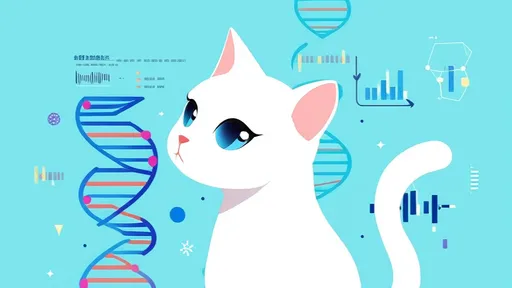
To understand why these colorful cats are almost exclusively female, we must delve into the X chromosome – specifically, how it carries the genes responsible for orange and black fur coloration. Female mammals possess two X chromosomes (XX), while males have one X and one Y chromosome (XY). The gene for orange fur color is located on the X chromosome, with its counterpart coding for black fur. In female cats, one X chromosome may carry the orange gene while the other carries the black gene, allowing for the simultaneous expression of both colors in their distinctive patchwork pattern.
The process called X-chromosome inactivation creates the tortoiseshell or calico pattern. Early in a female embryo's development, each cell randomly "turns off" one of its two X chromosomes. When the inactivated X carries the orange gene, that cell and its descendants produce black pigment. Where the X carrying black is silenced, orange pigment appears. This mosaic of activated and inactivated X chromosomes across different skin cells creates the characteristic brindled tortoiseshell or patchy calico patterns that make these cats so visually distinctive.
Male cats, with their single X chromosome, typically display either entirely orange or entirely black coats (unless influenced by other color genes). They lack the genetic machinery to produce both colors simultaneously because they don't possess a second X chromosome that could carry the alternate color gene. This fundamental genetic difference explains why spotting a male tortoiseshell or calico cat becomes a noteworthy event – their existence requires an unusual chromosomal configuration that defies the typical XY pattern.
So how does that rare 1% of male tortoiseshell or calico cats occur? These genetic anomalies typically arise from one of two scenarios. Some male torties have an extra X chromosome, giving them an XXY configuration – a condition similar to Klinefelter syndrome in humans. These cats are usually sterile and may exhibit other physical differences. Even rarer are male tortoiseshells with genetic mosaicism, where some cells gain an extra X chromosome during embryonic development. In both cases, the presence of two X chromosomes allows for the color pattern normally seen in females, while the Y chromosome maintains their male physiology.
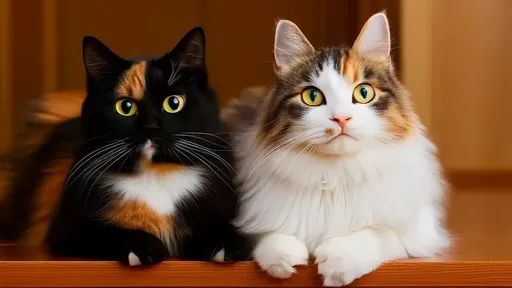
The distinction between tortoiseshell and calico cats lies primarily in their white spotting. Tortoiseshells (or "torties") display mingled orange and black fur with minimal white, creating a brindled appearance that resembles the mottled shell of a hawksbill sea turtle – hence their name. Calicos, on the other hand, show distinct patches of orange and black on a white background, with the colored areas often appearing more solid and separated. Both patterns result from the same genetic mechanisms, with the amount of white determined by separate genes influencing pigment migration during embryonic development.
Beyond their genetics, tortoiseshell and calico cats have accumulated considerable cultural significance across different societies. In Japanese folklore, the mi-ke (triple-fur) calico cats are considered especially lucky, with the maneki-neko ("beckoning cat") figurines often depicted as calicos. Irish legend suggests that tortoiseshell cats could protect homes from ghosts, while in the United States, they're sometimes called "money cats" for their supposed ability to bring financial fortune. This cultural reverence may stem partly from their relative rarity – with males being exceptionally uncommon – and their visually striking, almost magical appearance.
The personality stereotypes surrounding tortoiseshell and calico cats further enhance their mystique. Many owners and breeders describe "tortitude" – a sassy, strong-willed temperament characteristic of these colorful felines. While scientific studies haven't conclusively linked coat color to personality, the prevalence of this belief persists in feline folklore. Some researchers speculate that if a connection exists, it might relate to the same X chromosome complexity that determines their coat colors, potentially influencing neurological development. Whether fact or fiction, these personality associations add another layer to the rich tapestry of tortoiseshell and calico cat lore.
From a breeding perspective, producing tortoiseshell or calico cats follows predictable genetic patterns. An orange male paired with a black female will produce all tortoiseshell females and black males, while a black male with an orange female yields all tortoiseshell daughters and orange sons. Breeders aiming for calico patterns must introduce the white spotting gene through at least one parent. These predictable outcomes underscore how tightly linked these beautiful coat patterns are to fundamental genetic inheritance patterns – patterns that make nearly every tortoiseshell or calico kitten born a little girl by default.
Modern genetic research continues to uncover new insights about these colorful cats. Recent studies have examined how the random X-inactivation process creates such varied patterns even among genetically similar tortoiseshells, explaining why no two torties or calicos look exactly alike. Other research explores health implications of the XXY condition in male torties, or how coat color genes might correlate with other traits. Each discovery adds depth to our understanding of these living examples of genetic principles in action – principles that paint every tortoiseshell and calico cat as both a work of art and a scientific wonder.
For cat enthusiasts and geneticists alike, tortoiseshell and calico cats represent nature's perfect blend of beauty and science. Their vibrant coats illustrate complex biological processes visible to the naked eye, while their near-exclusive femininity highlights the profound influence of chromosomes on physical traits. Whether viewed as good luck charms, genetic marvels, or simply beloved pets, these colorful felines continue to captivate us – one X chromosome at a time.
By /Jun 12, 2025
By /Jun 12, 2025
By /Jun 12, 2025
By /Jun 12, 2025
By /Jun 12, 2025
By /Jun 12, 2025
By /Jun 12, 2025
By /Jun 12, 2025
By /Jun 12, 2025
By /Jun 12, 2025
By /Jun 12, 2025
By /Jun 12, 2025
By /Jun 12, 2025
By /Jun 12, 2025
By /Jun 12, 2025
By /Jun 12, 2025
By /Jun 12, 2025
