The world of feline genetics is a realm of endless fascination, where tiny molecular twists paint the canvas of a cat’s appearance in ways that often seem almost magical. Among the most striking patterns is the "black-faced" phenotype seen in breeds like the Siamese, Burmese, and Himalayan—a look that captivates with its dramatic contrast. But what lies behind this striking coloration? The answer is a dance of temperature-sensitive genes, evolutionary quirks, and a biological process that feels almost alchemical.
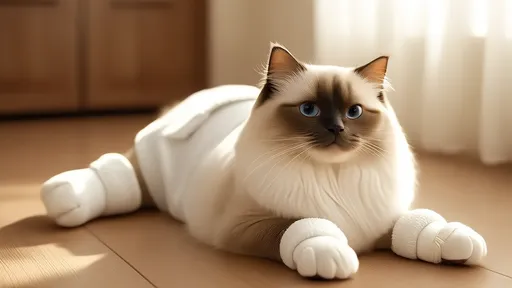
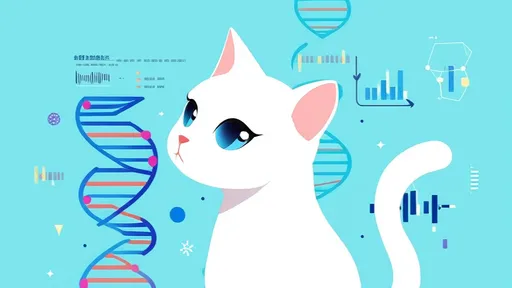
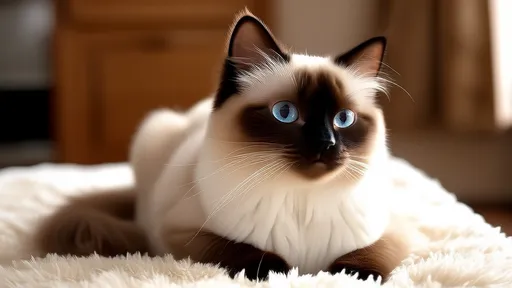
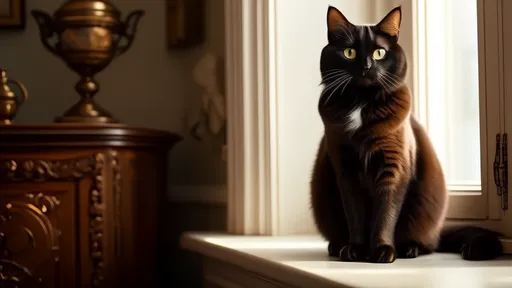
At the heart of this phenomenon is the tyrosinase gene, which governs the production of melanin, the pigment responsible for color in a cat’s fur. In most cats, this gene operates uniformly, resulting in consistent coloration. But in certain breeds, a mutation causes the enzyme to become heat-sensitive. This means it functions only in cooler areas of the body—such as the ears, face, paws, and tail—while remaining inactive in warmer regions. The result? A cat with dark "points" against a lighter body, as if dipped in ink at the extremities.
The science behind this is elegantly precise. When a cat with this genetic mutation develops in the womb, its entire body is warm, so pigment production is suppressed. After birth, as the kitten’s body temperature regulates, the cooler outer edges activate the tyrosinase enzyme, allowing melanin to darken those areas. This explains why Siamese kittens are born pale and develop their signature "mask" over time. The colder the environment, the darker these points can become—a fact that has led to anecdotes of Siamese cats in chilly climates sporting unusually bold markings.
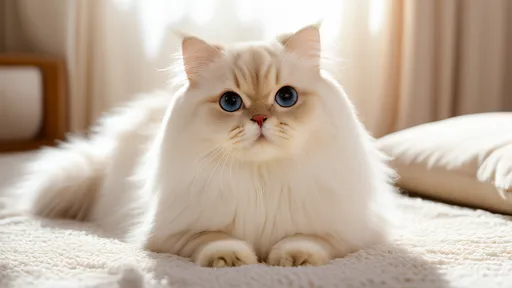
But why does this mutation persist, and why is it so prevalent in certain breeds? Evolutionary biologists suggest it may have arisen spontaneously in Southeast Asia, where many pointed breeds originate. The mutation was likely harmless—even advantageous—as it didn’t affect the cat’s survival. Humans, captivated by the striking appearance, selectively bred these cats, amplifying the trait. Over centuries, what began as a genetic fluke became a defining feature of entire breeds. The Himalayan, for instance, was deliberately created by crossing Siamese with Persians to blend the color pattern with long fur.
Beyond aesthetics, the temperature-sensitive gene offers a window into broader biological principles. It’s a reminder that genes don’t operate in isolation—they interact with their environment in dynamic ways. The same mechanism that gives a Siamese cat its dark face also influences conditions like albinism or even vitiligo in other species, including humans. Researchers studying these cats have gained insights into how temperature affects gene expression, with implications far beyond fur color.
Yet, for all its scientific intrigue, the black-faced pattern retains an air of mystery. Why do some pointed cats develop richer hues than others? Why do certain individuals exhibit "ghost striping" or faint tabby patterns on their dark points? The answers lie in the interplay of additional genes modifying the base pattern. For example, the agouti gene can introduce banded hairs, while other modifiers intensify or dilute the depth of the points. Each cat becomes a unique genetic mosaic, its fur a testament to invisible molecular battles and alliances.
For breeders and enthusiasts, this variability is part of the allure. A show-quality Balinese (the long-haired Siamese) must have sharply defined points with no "bleeding" of color into the body—a standard that demands careful genetic selection. Meanwhile, pet owners might cherish a "mink" patterned Burmese, whose softer contrast reflects a different allele of the same gene. The mutation’s versatility has spawned an entire spectrum of feline beauty, from the stark elegance of a Seal Point to the subtle glow of a Lilac Tonkinese.
In the end, the black-faced cat is more than a pretty quirk of nature. It’s a living lesson in genetics, a canvas where biology and environment collaborate to create art. Whether in a sleek modern apartment or a centuries-old Thai temple, these cats carry a genetic spell as old as their species—one that turns the simplest chemical reactions into a masterpiece of contrast and elegance.
By /Jun 12, 2025
By /Jun 12, 2025
By /Jun 12, 2025
By /Jun 12, 2025
By /Jun 12, 2025
By /Jun 12, 2025
By /Jun 12, 2025
By /Jun 12, 2025
By /Jun 12, 2025
By /Jun 12, 2025
By /Jun 12, 2025
By /Jun 12, 2025

By /Jun 12, 2025
By /Jun 12, 2025
By /Jun 12, 2025
By /Jun 12, 2025
By /Jun 12, 2025
