The Tonkinese cat represents a fascinating equilibrium in the feline world – a deliberate blend of two beloved breeds that creates something entirely new yet comfortingly familiar. This warm-toned intermediary between the angular sophistication of the Siamese and the rounded solidity of the Burmese carries forward the best qualities of both ancestors while developing its own distinct personality and physical charm.
Breeders in the mid-20th century noticed something magical happened when they crossed these two Southeast Asian breeds. The offspring displayed neither the extreme wedge-shaped head of the Siamese nor the completely rounded skull of the Burmese, but rather a modified wedge that struck observers as "just right." Their bodies followed suit – more substantial than the willowy Siamese yet more refined than the compact Burmese, achieving what fanciers call a "middleweight" balance.
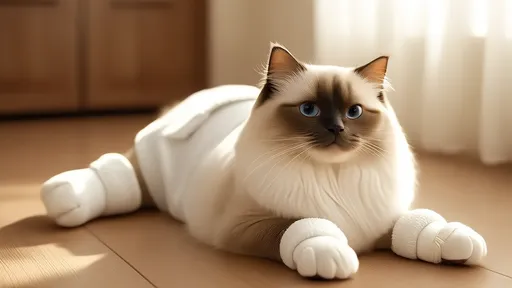
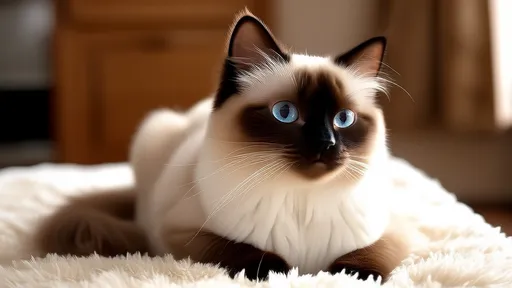
The color palette of the Tonkinese deserves particular attention. While the Siamese presents cool-toned points with stark contrast against a pale body, and the Burmese shows subtle shading in warmer hues, the Tonkinese offers something in between. Their points are distinctly visible but blend more gently into the body color, creating what's known as "mink" patterning. The warm caramel tones, champagne shades, and soft platinum colors glow with an inner luminosity that seems to radiate from within the fur itself.
Personality-wise, these cats perform their own balancing act. From their Siamese lineage comes an undeniable intelligence and curiosity – they will investigate every new object in their environment with systematic thoroughness. Yet the Burmese contribution softens the sometimes overwhelming vocal intensity of the Siamese into a more modulated conversational style. Tonkinese cats chat with their people using a range of murmurs, trills, and the occasional emphatic opinion, but rarely reach the piercing decibel level that characterizes their Siamese cousins.
What truly sets the Tonkinese apart is their social flexibility. While both parent breeds tend to form intense bonds with a particular person, the Tonkinese distributes its affection more democratically. They'll happily greet guests without suspicion, adapt well to multi-pet households, and demonstrate remarkable patience with children. This isn't to say they lack devotion – a Tonkinese will follow its chosen people from room to room – but they manage to do so without the sometimes claustrophobic single-mindedness that characterizes some oriental breeds.
The breed's moderate conformation brings practical advantages often overlooked in discussions about feline aesthetics. Their balanced proportions make them less prone to certain health issues that sometimes trouble their parent breeds. The slightly longer nose than the Burmese promotes better breathing, while the more substantial body structure compared to the Siamese provides greater resilience. It's as if nature itself approved of this carefully negotiated compromise between two extremes.
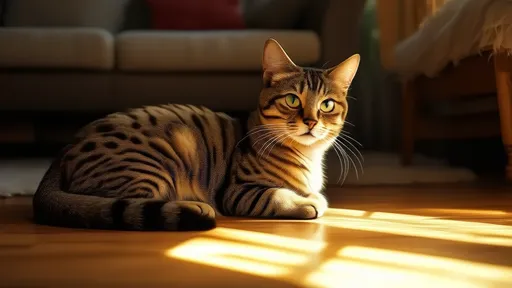
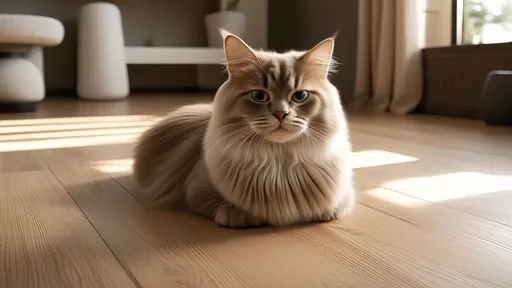
Grooming a Tonkinese becomes a pleasure rather than a chore due to their unique coat texture. The single-layer coat, inherited from both ancestors, lacks the dense undercoat that causes matting in many breeds. The fur feels astonishingly soft – often described as "mink-like" – and lies close to the body with a slight sheen that catches the light beautifully. Weekly brushing becomes less about hair control and more about bonding, as most Tonkinese relish the attention and will actively participate in the process.
Their play style reveals yet another dimension of this careful balancing act. Tonkinese retain the Siamese love of high places and acrobatic leaps, but with slightly more caution and less reckless abandon. They'll engage in marathon fetch sessions like the most dog-like of Siamese, but intersperse these energetic bursts with periods of contented lap-sitting that would do any Burmese proud. This self-regulating energy level makes them ideal companions for people who want an interactive cat without constant demands for attention.
The eyes of the Tonkinese might be their most striking feature – neither the deep gold of the Burmese nor the brilliant blue of the Siamese, but rather a mesmerizing aqua shade that seems to change with the light. In certain illuminations, the eyes appear more blue-green; in others, they take on a turquoise hue. This aquatic coloring perfectly complements their warm-toned coats, creating a harmonious whole that pleases the eye without overwhelming it.
Modern Tonkinese breeders face an interesting challenge – maintaining this delicate balance while expanding the gene pool. Careful outcrossing programs with both parent breeds ensure genetic diversity while preserving the distinctive middle ground that defines the Tonkinese. The best breeders approach this task with artistic sensitivity, knowing that tipping too far in either direction would lose the essential qualities that make the breed unique.
For prospective owners, the Tonkinese offers a masterclass in feline moderation. They provide the intelligence and interactivity of the oriental breeds without the potential intensity that some find overwhelming. Their affectionate nature comes with an independent streak that prevents clinginess, and their moderate activity level suits most households. In a world of extremes, the Tonkinese stands as a testament to the beauty of balance – a warm-toned ambassador between two feline traditions, creating something greater than the sum of its parts.
By /Jun 12, 2025
By /Jun 12, 2025
By /Jun 12, 2025
By /Jun 12, 2025

By /Jun 12, 2025
By /Jun 12, 2025
By /Jun 12, 2025
By /Jun 12, 2025
By /Jun 12, 2025
By /Jun 12, 2025
By /Jun 12, 2025
By /Jun 12, 2025
By /Jun 12, 2025
By /Jun 12, 2025
By /Jun 12, 2025
By /Jun 12, 2025
By /Jun 12, 2025
