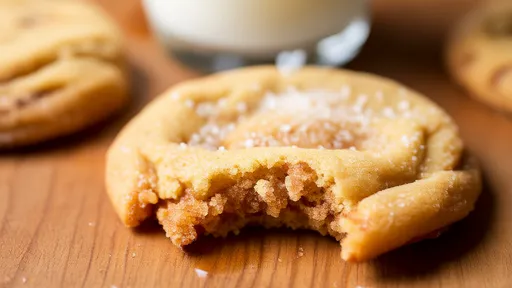
The pursuit of the perfect American-style soft-baked cookie—one with crisp edges giving way to a tender, almost molten center—has long been a holy grail for both home bakers and pastry chefs alike. At the heart of this textural alchemy lies two critical factors: the careful manipulation of brown sugar ratios and the often-overlooked magic of dough refrigeration. These elements, when mastered, transform humble cookie dough into something extraordinary, where each bite delivers a symphony of contrasts.
Brown sugar isn’t just a sweetener—it’s a moisture wizard. Unlike its granulated counterpart, brown sugar contains molasses, which introduces both hygroscopic (water-attracting) properties and a deeper, caramel-like flavor profile. The higher the proportion of brown sugar to white sugar in a recipe, the more moisture the baked cookie retains. This is because molasses slows down gluten formation, resulting in a denser, chewier crumb. Cookies made with 100% brown sugar will spread less during baking, maintaining a thicker shape with that coveted soft center. However, there’s a delicate balance: too much brown sugar can make cookies overly dense or even cakey, while too little sacrifices moisture for structure.
The acidity of brown sugar also plays a stealth role in texture. When combined with baking soda (a base), it creates tiny carbon dioxide bubbles that lift the dough just enough to prevent leadenness. This reaction is why many classic chocolate chip cookie recipes call for both sugars—the white sugar provides crispness through crystallization at the edges, while the brown sugar ensures the interior stays lush. Professional bakers often tweak these ratios seasonally, increasing brown sugar in drier months to combat kitchen humidity fluctuations.
Refrigeration is where cookie dough transcends from good to ethereal. Chilling cookie dough isn’t merely about convenience or food safety—it’s a transformative process that affects hydration, flavor development, and texture. During this rest period (ideally 24-72 hours), flour gradually absorbs liquid ingredients, leading to drier surface moisture that concentrates flavors through Maillard reactions during baking. The butter also solidifies, which means cookies baked from cold dough spread more slowly and evenly, preventing thin, crispy outcomes.
The cold truth? Skipping the chill results in cookies that taste flat—literally and figuratively. As dough rests, enzymes break down starches into simpler sugars, amplifying butterscotch and toffee notes. Meanwhile, hydration equalization prevents dreaded "tunneling"—those uneven air pockets that create dry patches. For those seeking scientific precision, the ideal refrigeration temperature hovers between 38-40°F (3-4°C), cold enough to slow fermentation but not so frigid that it inhibits moisture redistribution.
Marrying these two techniques requires intuition. A dough with high brown sugar content benefits from extended chilling to offset its inherent moisture retention—48 hours yields fudgy centers with crackly tops. Conversely, recipes leaning toward white sugar might need just overnight refrigeration to achieve optimal texture. Bakers should note that doughs with more brown sugar also darken faster during baking; reducing oven temperature by 25°F (about 15°C) prevents premature browning while allowing centers to set properly.
In professional kitchens, pastry chefs often employ a hybrid approach: blending muscovado sugar (an unrefined brown sugar with intense molasses) with light brown sugar for layered complexity, then portioning dough balls before chilling to ensure even heat penetration during baking. Home bakers can replicate this by using an ice cream scoop for uniformity—a small detail that prevents some cookies from overbaking while others remain doughy.
The sensory payoff is undeniable. When executed correctly, each bite delivers a cascade of textures: the initial crunch of the caramelized edge, the yielding softness of the center, and the lingering richness of browned butter and toasted sugar. This isn’t mere baking—it’s controlled chaos, where precision meets indulgence. Whether enjoyed warm with melting chocolate or days later (if they last that long), these cookies embody the very essence of comfort, proving that sometimes, the most profound culinary victories come from understanding the silent language of ingredients and time.
By /Jun 18, 2025
By /Jun 18, 2025
By /Jun 18, 2025
By /Jun 18, 2025
By /Jun 18, 2025
By /Jun 18, 2025
By /Jun 18, 2025
By /Jun 18, 2025
By /Jun 18, 2025
By /Jun 18, 2025
By /Jun 18, 2025
By /Jun 18, 2025
By /Jun 18, 2025
By /Jun 18, 2025
By /Jun 18, 2025
By /Jun 18, 2025
By /Jun 18, 2025
